
Knee arthroplasty has undergone unprecedented technological advancements in the last ten years. Long considered a last resort reserved for elderly patients, knee replacement is now available to a broader, younger, and more active population. This evolution is accompanied by a new requirement: an implant that restores not only reliable joint function but also a feeling of normal knee movement. natural, all with increased longevity.
Behind the expression next generation knee prosthesis, We are not referring to a single model but rather a set of converging advances: personalized implant design, the use of more wear-resistant materials, robotic assistance in the operating room, and cementless fixation. Each of these advances addresses a specific objective: improving the precision, postoperative comfort, and lifespan of the prosthesis.
Far from the hype, this article focuses on what really changes for you, the patient, whether you are considering a total or partial prosthesis, or are simply trying to understand how knee surgery has evolved.
When knee replacement becomes necessary: indications and clinical context
The stages of osteoarthritis that lead to intervention
Knee replacement surgery is never a trivial decision. It is considered when joint damage has become too extensive to be managed with conservative treatments alone. Understanding your reasons for considering this procedure helps you assess the benefits you can expect from a modern implant.
Knee osteoarthritis, or gonarthrosis, progresses through successive stages. These are generally classified into four radiological grades, from early joint space narrowing (stage 1) to near-complete cartilage loss (stage 4). It is in stages 3 and 4 that prosthetic surgery becomes a serious option.
In stage 3, the cartilage is severely thinned, pain becomes a daily occurrence, and everyday activities like walking or climbing stairs become difficult. In stage 4, direct bone-on-bone contact causes frequent inflammatory flare-ups, progressive stiffness, and sometimes visible knee deformity. The discomfort is no longer just intermittent; it becomes permanent and impacts quality of life. It is precisely at this point that a prosthesis becomes truly necessary.
Other, less common conditions can also lead to the need for a prosthesis: post-traumatic osteoarthritis, the after-effects of joint fractures, osteonecrosis of a femoral condyle, or certain forms of inflammatory rheumatism such as rheumatoid arthritis. In all cases, the mechanism is the same: the joint surface is too damaged to continue functioning properly.
When conservative treatments have shown their limitations
Before considering surgery, several non-surgical treatment options are routinely offered. Their aim is not to cure osteoarthritis but to slow its progression and alleviate its symptoms.
We begin with lifestyle and dietary measures: weight loss if necessary, and appropriate physical activity to strengthen the periarticular muscles without worsening pain. Physiotherapy, through targeted strengthening of the quadriceps and knee stabilizing muscles, can improve function and postpone the need for surgery.
Drug treatments, starting with simple analgesics and then non-steroidal anti-inflammatory drugs (NSAIDs), help manage periods of flare-ups. Corticosteroid injections provide temporary relief from inflammatory episodes; hyaluronic acid injections (viscosupplementation) aim to lubricate the joint and can provide comfort for several months.
Wearing a knee brace or using a cane on the opposite side are also simple aids that reduce mechanical stress on the worn knee. In some cases, a knee arthroscopy This may be proposed to clean the joint and postpone the fitting of the prosthesis for a few months or years.
When all these options are no longer sufficient, when pain persists despite well-conducted treatment, when walking distance is reduced and sleep is disturbed, a prosthesis becomes the most rational solution to regain satisfactory function and stop the deterioration of quality of life.
Total, unicompartmental, bicompartmental prosthesis: what's the difference?
Not all arthritic knees require the same type of implant. The choice depends on the number of affected compartments.
The knee is classically divided into three compartments: the medial tibiofemoral compartment (inner side), the lateral tibiofemoral compartment (outer side), and the patellofemoral compartment (between the kneecap and the femur). When wear is limited to a single compartment, a unicompartmental prosthesis or partial knee prosthesis.
It replaces only the worn surface, preserving healthy bone and ligaments, and maintaining a kinematics very close to that of the native knee. Its advantages include a shorter procedure, often a faster recovery, and a more natural knee feel. While not all patients are eligible, it is a valuable option for relatively young individuals whose osteoarthritis remains localized.
If two out of three compartments are affected, it is sometimes referred to as bicompartmental prosthesis For example, medial femorotibial and femoropatellar. This less common solution preserves the healthy lateral compartment and represents an intermediate between unilateral and total.
Finally, when wear and tear affects all three compartments, a total knee prosthesis Total knee replacement (TKR) is indicated. It replaces all the articular surfaces: the femur, the tibia, and, in most cases, the posterior surface of the patella. Modern total knee replacements strive to reproduce the natural kinematics of the knee as closely as possible, with anatomical designs, mobile bearing surfaces, or posterior stabilization systems that adapt to the ligamentous condition of the knee.
Understanding these distinctions helps you better understand why your surgeon will suggest one solution or the other depending on your personal situation.
What is a new generation knee prosthesis?
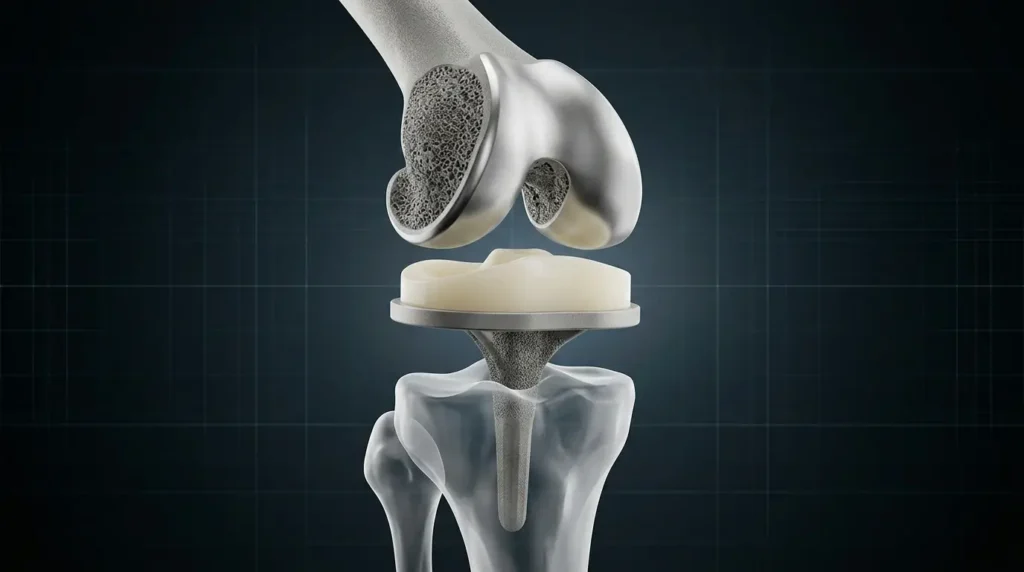
A break from older generation implants
To appreciate the progress made, one must imagine what a knee replacement was like twenty or thirty years ago. The first total knee implants, fitted in the 1970s and 1980s, had already transformed the lives of millions of patients. But they had several limitations: a standardized geometry that didn't always account for individual anatomical variations, polyethylene that was susceptible to wear over time, cement fixation that could degrade after ten years, and often long and painful postoperative periods.
The so-called prostheses new generation do not stem from a sudden break, but from an accumulation of improvements in three directions: the better anatomical reproductionthe materials progress and the surgical precision. The sliding surfaces wear down much less quickly. The surfaces in contact with the bone have become more biocompatible and promote long-lasting biological fixation. Navigation, custom guides, and robotics reduce the gap between what is planned and what is achieved.
Several laboratories (Zimmer Biomet, Stryker, DePuy Synthes, Smith & Nephew, etc.) offer solutions integrating these innovations, and it is up to the surgeon to choose the most suitable combination for each case.
What the term actually covers new generation
When we talk about next-generation knee prostheses, we're referring to a range of technologies that can be used together or separately. Here they are:
- The custom-made implant : manufactured from a pre-operative scan, it conforms to the patient's anatomy.
- Custom cutting guides (PSI) : 3D printed polymer blocks, positioned on the bone, which accurately indicate the cutting planes and improve the reproducibility of implant positioning.
- Very low wear materials Porous titanium, trabecular tantalum, or oxinium. They reduce wear and oxidation and promote biological fixation.
- Cement-free fixing The porous surface of the implant allows the patient's bone to grow into it, ensuring a living anchor without the need for cement. Long reserved for the hip, it is now gaining ground in the knee.
- Robotics and navigation Systems like MAKO, ROSA, or VELYS offer 3D pre- or intraoperative planning and real-time guidance in the operating room. The surgeon retains control, but the robot helps them adhere to the plan with greater precision.
- Custom kinematics : we no longer seek a neutral mechanical axis at all costs, but we respect the ligamentous envelope and the kinematics specific to the patient, for a more natural sensation.
In summary, a new generation knee prosthesis is not a miracle product, but a combination of improvements.
The personalized prosthesis: an implant designed for your anatomy
Starting with a scan to design the custom implant
Your knee is not like your neighbor's. Differences in size, bone curvature, femorotibial torsion, or trochlear orientation make each anatomy unique. A standard implant, even in multiple sizes, can only approximate this shape without ever perfectly matching it.
The customization process begins with a low-dose scan. The images reconstruct the knee in 3D. From this digital model, an implant is designed so that its bony surfaces replicate the contours of your femur. It is then manufactured, most often using 3D printing in titanium alloy, and delivered to the surgeon before the procedure. To learn more about this technology, I invite you to visit the dedicated page. custom-made knee prosthesis.
A custom-made implant is particularly beneficial for patients with atypical or malformative anatomy.
Custom Cutting Guides (PSI): Why They Matter
Not all patients require a fully custom-made implant. An intermediate alternative is to use custom cutting guides (PSI). These 3D printed polymer blocks fit precisely onto bone surfaces and indicate cutting planes to the surgeon, without the need for conventional intramedullary instruments.
These guides do not replace the surgeon's judgment, who always validates the final positioning and ligament balancing.
Modern materials: the key to a durable and comfortable prosthesis
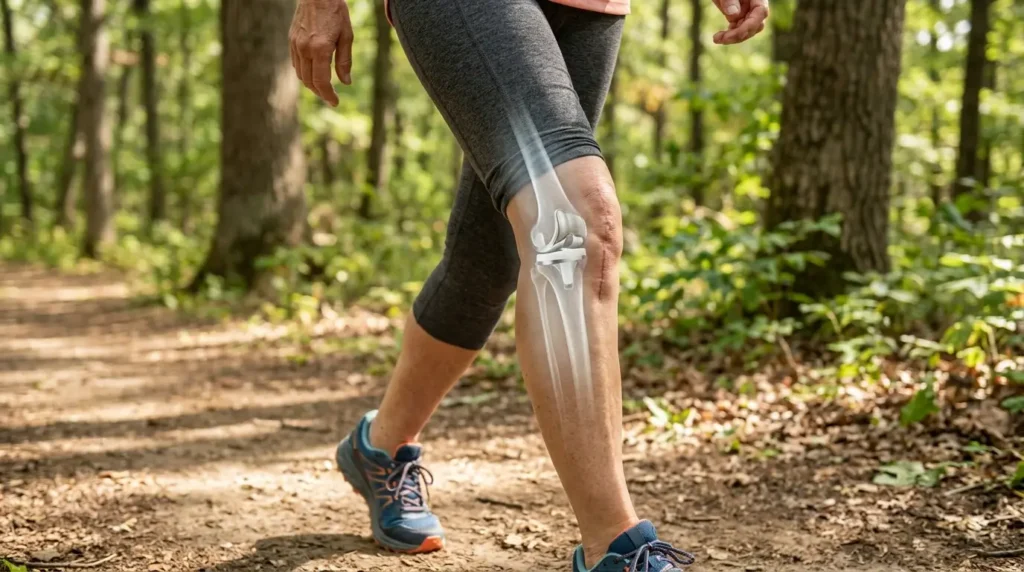
Titanium, tantalum, and oxinium alloys: what are the benefits for the patient?
Metal parts have also evolved. While chromium-cobalt alloys remain a reliable standard, other materials offer targeted properties.
The titanium It is primarily used for implants on the tibia. Its biocompatibility is excellent and its elasticity, closer to that of bone, reduces the risk of bone fragility.
The trabecular tantalum, A porous metal that mimics spongy bone promotes rapid bone regrowth and ensures primary stability. This type of material is used in revision implants.
L'’oxinium (Oxidized zirconium) has an extremely smooth surface that further reduces friction and debris production. It is an attractive option for patients with documented hypersensitivity to nickel or cobalt.
In practice, the choice of material depends on your age, activity level, bone structure, and any allergies.
Cementless fixation: an option for younger and more active patients
How the bone "attaches" to the prosthesis (osseointegration)
Knee prosthesis fixation can rely on two mechanisms. Cemented fixation provides immediate stability thanks to an acrylic surgical cement. This is the most common and proven technique. Cementless fixation, on the other hand, relies on osseointegration: the surface of the implant in contact with the bone is made porous (titanium, tantalum), and the patient's bone cells migrate into this porosity. Within a few weeks to a few months, the bone integrates with the implant. The anchoring becomes biological, without a layer of cement that could degrade.
This fixation requires impeccable primary stability and good bone quality (no osteoporosis).
For whom is a cementless prosthesis suitable?
The ideal candidate is a patient under 70 years of age with preserved bone density and favorable body shape. The objective is twofold: to prevent long-term degradation of the cement mantle and to preserve bone stock for potential future revision. In older patients or those with osteoporosis, cement fixation remains the gold standard because it offers immediate stability without relying on bone regrowth.
Therefore, it is not a technology superior In absolute terms, but a relevant option depending on physiological age and bone quality.
Robotic knee surgery
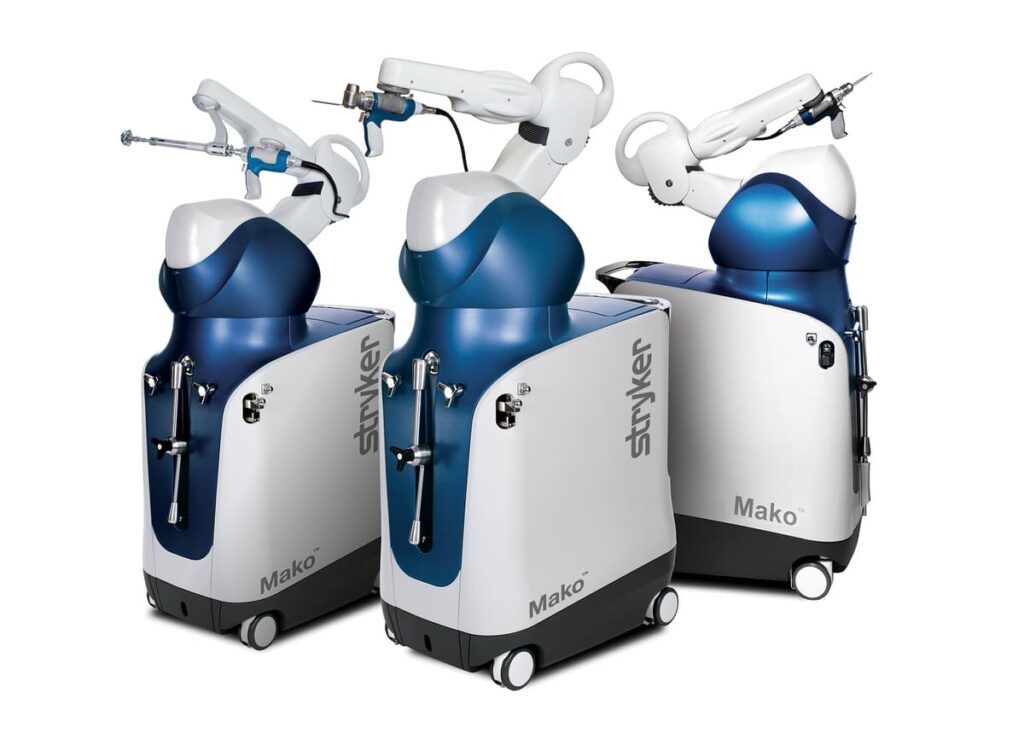
How the robot assists the surgeon without replacing him
In orthopedic surgery, robotics is an assistive tool that increases the precision of the procedure without replacing the practitioner's judgment. Before the operation, imaging (CT scan or intraoperative acquisition) allows the construction of a 3D model of the knee and the virtual planning of the implant's position.
In the operating room, an infrared camera tracks sensors attached to the femur and tibia. The robot guides the surgeon's arm or adjusts the cutting instrument to maintain the correct plane. If the movement deviates, the system slows the burr or stops the cut.
The goal: to reduce the gap between planned and achieved positioning. If you'd like to learn more about these technologies, I refer you to the full article on the knee prosthesis with robotic assistance.
Preoperative scan and 3D planning
most systems (MAKO, …) require a preoperative scan of the hip, knee, and ankle to reconstruct the complete mechanical axis. 3D planning allows visualization of bone coverage, alignment, and joint height in advance, and enables testing of different sizes or inclinations. A system, the VELYS, does not require a scanner: it maps the knee intraoperatively using sensors.
The main systems available in France (MAKO, ROSA, VELYS)
- MAKO (Stryker): haptic arm robot, saw held by the robotic arm, used for total and unicompartmental prostheses. Stryker Triathlon Prosthesis.
- ROSA (Zimmer Biomet): optical localization robot indicating the position of the ancillaries, flexible in the choice of Zimmer Biomet implants.
- VELYS (DePuy Synthes): robotic navigation without prior scanning, intraoperative mapping, dedicated to the Attune implant.
Regardless of the technology used, the surgical procedure is coded identically to conventional surgery by the Health Insurance.
Kinematics: regaining a more natural knee
Why your knee movement influences the type of implant
The knee is not a simple hinge. It rotates, glides, and rolls according to a kinematics dictated by the shape of the articular surfaces and the tension of the ligaments. A new generation of prostheses aims to reproduce this kinematics as closely as possible.
Mechanical alignment versus kinematic alignment: understanding the difference
For decades, neutral mechanical alignment (femoral-tibial axis at 0°) was the dogma for evenly distributing loads. Kinematic alignment stems from the observation that a portion of the population has asymptomatic constitutional varus or valgus. Imposing a neutral axis can alter kinematics.
Kinematic alignment respects the native axis, correcting only what is related to osteoarthritis. Recent studies show good results, with no premature wear detected. The very long-term follow-up remains shorter than that of mechanical alignment, and some surgeons adopt an intermediate position (limited kinematic alignment).
Procedure and RAAC protocol
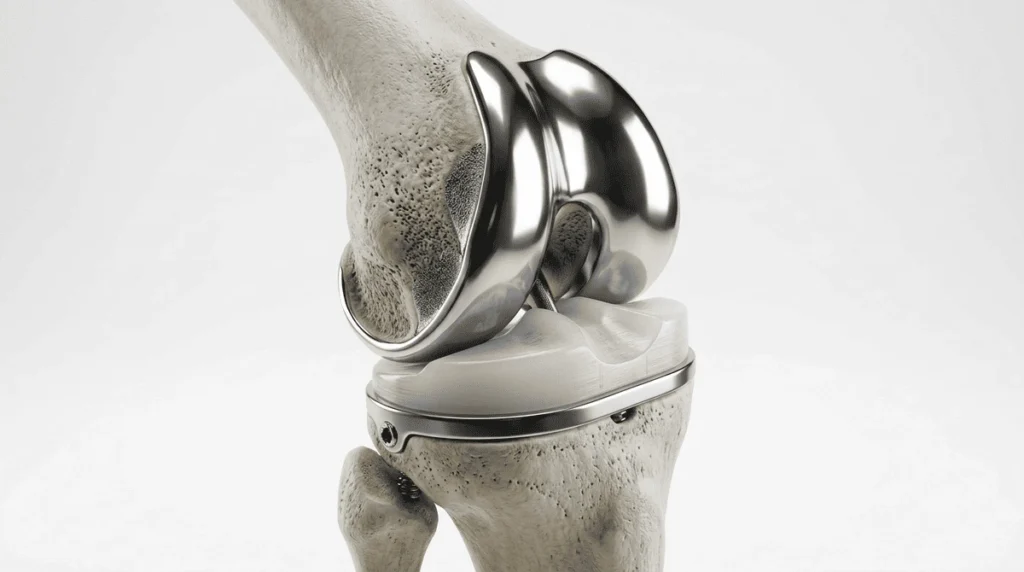
Anesthesia, operating time and hospitalization
Anesthesia can be general or regional (spinal), often combined with light sedation. Spinal anesthesia reduces nausea and provides residual pain relief for several hours, facilitating initial mobilization.
The operating time is approximately 60 to 90 minutes for a total hip replacement and 45 to 60 minutes for a unicompartmental hip replacement. Robotic surgery does not lengthen the procedure. Hospitalization lasts on average 2 to 4 days, often less with modern enhanced recovery after surgery (ERAS) protocols.
The RAAC protocol: why you will get up on the day of the operation
Enhanced Recovery After Surgery (ERAS) transforms the patient journey: detailed preoperative information, light meals up to two hours before surgery, anesthesia with limited opioid use, and early mobilization. On the day of the procedure, you will be encouraged to sit on the edge of the bed, or even walk a few steps with assistance. This verticalization helps prevent thromboembolic complications and sends a positive signal. Pain is managed using a multimodal approach (analgesics, anti-inflammatories, local injections) to allow for immediate active rehabilitation.
Follow-up care in a rehabilitation center or direct return home: how is the care pathway decided?
Two main options upon exit:
- Direct return home : preferred for autonomous patients, well supported, in suitable accommodation, with private physiotherapy.
- Stay in a rehabilitation center (Follow-up and Rehabilitation Care): indicated in cases of isolation, unsuitable housing, comorbidities, or lack of available physiotherapist. Duration of 2 to 4 weeks of intensive rehabilitation.
The decision is made beforehand with the surgeon and the healthcare team.
Recovery, rehabilitation and return to activity
Physiotherapy: Typical program and duration
Rehabilitation begins on the same day as the procedure and is divided into three phases.
- Early phase (first 3 to 4 weeks) Combating edema, regaining full extension (0°), flexion to 90°, activating the quadriceps and strengthening the glutes. Walking with two crutches then one until stable.
- Intermediate phase (2nd to 3rd month) : amplification of ranges of motion (flexion > 110-120°), normalization of walking without a cane, intensive strengthening and proprioceptive work.
- Advanced phase (up to and beyond the 6th month) : more athletic reconditioning (cycling, swimming, prolonged walking), with respect for the steps to avoid stiffness or pain.
Supervised physiotherapy lasts on average 3 to 6 months, with 2 to 4 sessions per week at the beginning. Throughout your recovery, it is important to know the Movements to avoid after knee replacement will help protect your implant and progress safely.
Returning to sport after knee replacement: recommended timeframes and activities
- Low-impact activities, recommended without restriction : walking, cycling, swimming (excluding breaststroke), golf, water aerobics, ballroom dancing.
- Activities with moderate impact, resumption after 6 to 9 months : hiking, doubles tennis, skiing on groomed snow, with the surgeon's approval and strong musculature.
- High-impact sports are not recommended. Running, singles tennis, combat sports, football, basketball, due to the risk of premature wear or loosening.
Recovery should be gradual, testing the knee's tolerance. Any fluid buildup or persistent pain requires stopping and consulting a doctor.
Sustainability, risks and complications to be aware of

What is the lifespan of a modern knee prosthesis?
National registries indicate a survival rate of 93 to 95 % at 15 years, and 80 to 85 % at 20 years for previous generation implants.
With current materials, it is estimated that a prosthesis implanted in a patient aged 60-65 can remain functional for 20 to 25 years, or even longer. To explore this topic further, I invite you to read the article dedicated to... knee replacement success rates.
Longevity beyond 20 years is lacking for these recent technologies. Individual factors (weight, activity level, bone quality, adherence to instructions) also influence longevity.
Possible complications: infection, loosening, stiffness, venous thrombosis
- Infection Early or late onset. Warning signs: unusual pain, redness, discharge, persistently warm and swollen knee. Complex treatment (prolonged antibiotic therapy, surgical revision). Prevention: asepsis, antibiotic prophylaxis, treatment of dental infections.
- Unsealing Loss of fixation between the implant and the bone, whether mechanical or biological. This manifests as progressive mechanical pain. Along with infection, it is the main cause of revision surgery.
- Stiffness Flexion < 90° or incomplete extension after 3 to 6 months of rehabilitation. May require mobilization under anesthesia or arthrolysis. Rate around 3 to 5 %, reduced by modern techniques.
- Deep vein thrombosis : prevented by anticoagulants for 4 to 6 weeks, compression stockings and early mobilization.
- Other rarer complications: nerve damage, intraoperative fracture, algodystrophy, metal allergy.
Prosthetic revision: in what cases is a prosthesis changed and how?
A revision procedure involves removing all or part of the implant. This is a more complex intervention, using revision implants (extension rods, shims, cones). Indications include: chronic infection, painful loosening, severe polyethylene wear, major instability, and fracture around the prosthesis.
If you wish to understand this intervention in detail, I refer you to the page dedicated to the knee replacement revision. The current strategy aims to postpone this step as much as possible thanks to a first implant that is perfectly adapted and precisely placed.
Cost, coverage and reimbursement
Health insurance and out-of-pocket expenses: how to prepare financially
Recommended approach:
- Request a quote from the surgeon and the facility.
- Send this quote to your health insurance provider for reimbursement estimate.
- Check the SSR coverage.
- Anticipate indirect costs: private physiotherapy, equipment, sick leave.

Key questions to ask before the procedure
- On the implant What type (total, partial), and estimated lifespan?
- Regarding the technique Classic, custom-made, robotic assistance, or navigation? Why this choice?
- On the fixing Cemented or uncemented, and for what reasons?
- On the postoperative journey Length of hospital stay, ERAS protocol, is direct return home possible?
- Regarding the risks : main risks and their prevention in your case.
No technology eliminates all risks or guarantees a perfect result. Here's the gist.
Frequently Asked Questions
What is the lifespan of a modern knee prosthesis?
With current materials, particularly highly cross-linked polyethylene enriched with vitamin E, it is estimated that a knee prosthesis can remain functional for twenty to twenty-five years, or even longer. Registries show a 15-year survival rate of 93 to 95% for previous generations. Longer-term data beyond twenty years is insufficient to confirm these figures for the very latest innovations.
At what age can a knee replacement be performed?
There is no absolute minimum or maximum age. The indication depends on the failure of conservative treatments and the impact on quality of life. A partial denture or a cementless implant can be offered at 50-55 years of age. A cemented total denture at 85 years of age remains an excellent solution if the patient's overall health permits.
Is it possible to play sports after a knee replacement?
Yes, under certain conditions. Low-impact activities (walking, cycling, swimming, golf) are encouraged without restriction. Moderate-impact sports (hiking, downhill skiing, doubles tennis) can be resumed after six to nine months, with the surgeon's approval. High-impact sports (running, football, singles tennis) are not recommended as they accelerate implant wear.
Is a knee prosthesis compatible with an MRI?
Yes, in almost all cases. The alloys (titanium, chromium-cobalt, oxinium) are not ferromagnetic. Always inform the staff about your prosthesis before the examination; image distortion is possible around the implant, but radiologists compensate for it.
How long does the hospital stay last?
On average, two to four days. With enhanced recovery after surgery (ERAS) protocols and robotic surgery, discharge as early as the next day is possible for some patients. A direct return home depends on your support network and the suitability of your home; otherwise, a short stay in a rehabilitation center (two to four weeks) is arranged.
What is the difference between a total and a unicompartmental prosthesis?
A total joint replacement replaces all joint surfaces. It is indicated when osteoarthritis affects at least two compartments. A unicompartmental joint replacement replaces only the worn compartment (inner or outer), preserving healthy bones and ligaments. It offers a more natural feel and a faster recovery, but it is only possible if the osteoarthritis remains very localized.
Is robotic surgery covered by insurance?
Robotic-assisted surgery is reimbursed at the same rate as conventional surgery by the French National Health Insurance (Assurance Maladie). The robot itself does not incur any additional charges. However, the surgeon may charge fees exceeding the standard rate if they practice in sector 2. You will be provided with a quote.
How long does rehabilitation take?
Rehabilitation supervised by a physiotherapist lasts on average three to six months. The first three months are the most intensive (several sessions per week). Full recovery, with a pain-free and normal gait, can take up to a year.
Are you considering a next-generation knee prosthesis?
The technologies presented in this article (robotics, custom implants, ultra-low-wear materials) offer remarkable possibilities. However, none of them replaces a crucial step: the personalized clinical evaluation. Your anatomy, your physiological age, the stability of your ligaments, and your functional expectations are unique. It is from these parameters that the most relevant surgical strategy for you is developed, going far beyond mere technical prowess.
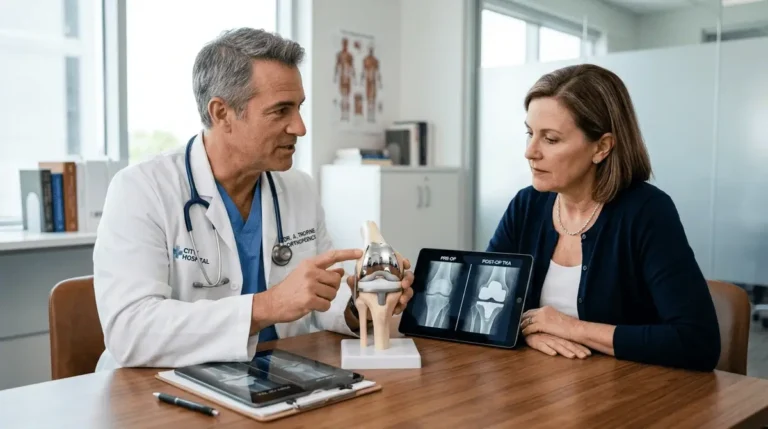
During the consultation, we will take the time to analyze your knee: its wear and tear, range of motion, and kinematics; and to answer your questions precisely. Together, we will determine whether a partial or total knee replacement is recommended, which type of implant and fixation will best serve your daily life, and how to approach the postoperative period with peace of mind. My goal is for you to be able to envision the procedure with confidence, understanding each step of the process.
I invite you to schedule a consultation appointment. We will review your situation and I will propose a solution tailored to your anatomy, lifestyle and recovery goals.



 English
  French