KNEE SURGERY

Knee ligamentoplasty


Ligamentoplasty is a surgical procedure performed under the supervision of a surgeon. arthroscopy to replace a anterior cruciate ligament (ACL) ruptured. This operation aims to restore stability to the knee and prevent secondary damage to the cartilage and menisci.
There are several surgical techniques for performing anterior cruciate ligamentoplasty (Kenneth Jones, DT4, DIDT, Lemaire, quadricipital tendon, Fascia Lata plasty, etc.). 
The main criterion analysed to select an operative indication will be the instability of the knee felt by the patient and assessed by the surgeon.
A number of criteria are taken into account when deciding on an operation, including the patient's age, physical and sporting activities, discomfort due to instability, etc.


knee picto

What are the consequences of a rupture of the anterior cruciate ligament?

When it is ruptured, the anterior cruciate ligament disrupts :

  • The joint stability knee
  • The natural biomechanical functioning of the knee
  • Normal meniscus function

This instability means that menisci and the articular cartilage to abnormal stresses (particularly in shear), which can lead to progressive degradation (particularly damage to the meniscus).

Ligamentoplasty aims to restore this stability by replacing the torn anterior cruciate ligament with a graft.

Sometimes, cruciate ligament rupture is not associated with severe instability. This is particularly the case in patients with good musculature. This can compensate for the potential instability generated by the loss of the cruciate ligament.

cruciate ligament rupture

What does knee ligamentoplasty involve?

Ligamentoplasty is performed under arthroscopy. 

The surgeon makes two small incisions on either side of the patellar tendon, just below the kneecap. He will also make one or more slightly longer incisions, of around 3 to 4 cm, opposite the tibia or femur (depending on the surgical technique used). 

Here we describe the technique we prefer, DT4.

The key milestones :

1

Complete joint assessment

The surgeon inspects all the knee's ligament and meniscus structures. 
It locates the remaining parts of the ruptured anterior cruciate and checks the posterior cruciate. 
The medial and lateral menisci are tested and checked on their compartments: anterior horn, middle segment, posterior horn. A test is carried out to check their stability and the absence of hidden lesions that would not have been seen on the MRI. 
If there is an associated meniscus lesion, a repair or partial resection is carried out. 
Meniscal suturing is always preferred where possible. Suturing is usually carried out using automatic anchoring systems. If the meniscus fragment is too damaged, a resection is carried out as sparingly as possible.

2

Graft harvesting

The graft is harvested from :
tendons hamstrings. In the DT4 technique, the surgeon takes the tendon from the semitendinosus (DT) muscle. If this tendon is too thin and fragile, the tendon from the rectus medialis is also harvested to obtain a thicker, stronger graft.
The tendon is cleaned, prepared and calibrated, sutured and reinforced with suture, then fitted with traction sutures for insertion.
During preparation, it is folded on itself to increase its thickness by a factor of 4, hence the name of the technique: DT4.
The length and calibration depend essentially on the patient's build. We generally obtain a transplant with a thickness of between 7.5 mm and 10 mm. 

3

Preparation of bone tunnels

Under arthroscopic control, tunnels are made in the femur and tibia to allow a better view of the bone. isometric positioning of the future ligament, ensuring even tension during flexion and extension of the knee.
Specific sights are used to create these tunnels. The tunnels will allow the transplant to pass through. The diameter of these tunnels corresponds to the diameter of the new cruciate ligament prepared beforehand.  
The joint is washed after the tunnels are made to remove any small debris from the drilling.

4

Placing the graft

The graft is passed through the tunnels and into the joint. It is then positioned in place of the old torn cruciate ligament.
The graft is energised and firmly attached using screws or 'button' type fastening systems on the femur and tibia. 
If a meniscus repair or procedure is necessary, it is always carried out before the transplant is inserted.
The surgeon checks that the transplant does not conflict with the notch in the femur. 

5. Closure and start of rehabilitation

The incisions are closed. 

On the day of the operation, the patient is lifted by the physiotherapist to take his or her first steps. Support is immediately authorised in the vast majority of cases (with a few exceptions), using canes for pain relief. The first rehabilitation movements are explained. 

The patient is discharged home on the day of the operation: this is an outpatient procedure (except in special cases). 

It is advisable to apply ice regularly to the knee (even through the dressing) several times a day for the first 15 days. This will help the oedema to disappear and limit the risk of haematomas. 

Daily walking is permitted. 

A nurse will change the dressings to clean and check the scar every two to three days for 3 weeks. 

Physiotherapists provide rehabilitation treatment immediately, from the very first days. 

We recommend 3 to 4 sessions a week. 

The objectives for the first few weeks are :

  • control the locking of the quadriceps, 
  • regain joint range of motion (full flexion and extension),
  • mobilise the patella,
  • stimulate the different muscle groups (quadriceps, hamstrings, etc.), 
  • wean off crutches in 2 to 3 weeks

The patient's motivation and active participation are essential factors in the success and progress of rehabilitation.

After this initial phase, we enter a more dynamic and active rehabilitation phase:

  • Bikes, weight machines
  • work on proprioception
  • working on balance
  • muscle reathletisation, mass and power gains
  • treadmill running...

Axial sports can generally be resumed after 6 months. For contact pivot sports, you will need to wait 9 months.

1

Where to have an operation in Paris?

Our teams work in a number of leading establishments in Paris:

For consultations:

  • Espace Médical Vauban
  • IMSS - Institut Médical Sport Santé
  • ARAGO Clinic

For interventions:

  • ARAGO Clinic

You will be cared for by recognised specialists: Dr Kerboull, Dr Sailhan and Dr Zilber, experts in hip surgery.

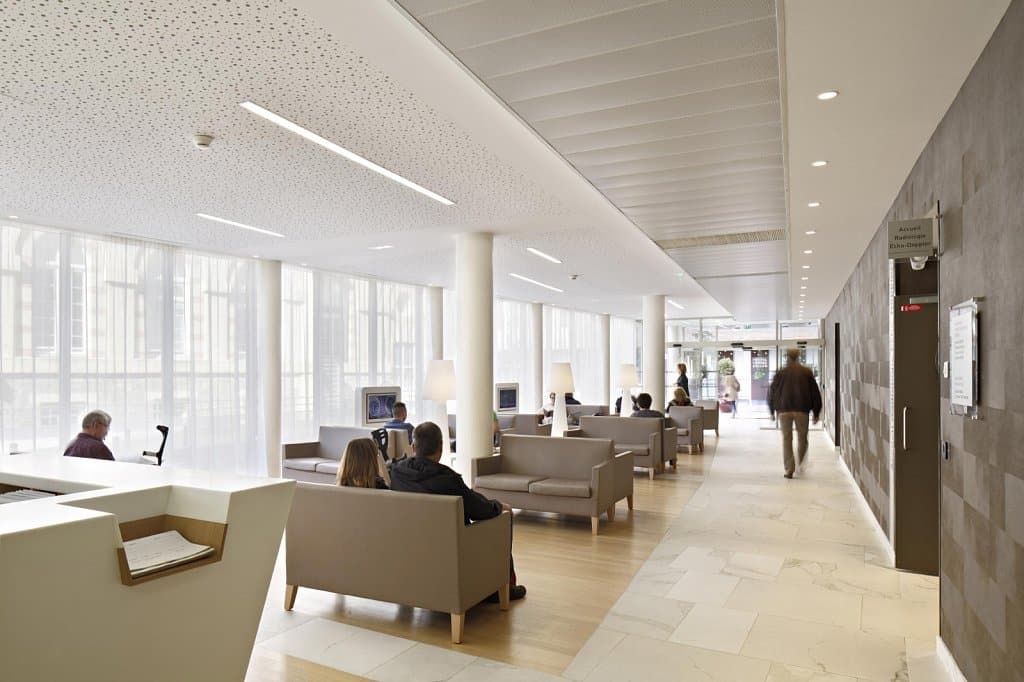
clinical entrance

Ligamentoplasty is a reliable and common procedure for restoring a stable and functional knee. Thanks to arthroscopy, recovery is faster.

Are you suffering from a ruptured anterior cruciate ligament? Contact our team for personalised support.